Semba, kizomba, tarraxinha and urban kiz are related styles, not four names for one dance. Semba is the older Angolan music and partner dance; kizomba is its smoother, slower descendant from the 1980s; tarraxinha strips kizomba down to a slow, minimal beat danced close and almost in place; and urban kiz is a European branch, more linear, more open and shaped by electronic and R&B production. The quickest way to tell them apart is with your ears: the music invites the movement.
One family, several names
If you have taken a beginner class, you have probably been told you are learning “kizomba”. Go to a few socials, festivals or parties and you will hear the same word used for quite different music and movement. That is not because anyone is wrong. Kizomba has travelled from Luanda to Lisbon, Paris, Rotterdam and far beyond, and it has changed along the way.
The anthropologist Livia Jiménez Sedano traces how the kizomba couple dance became popular in Portuguese-speaking African cities and Lisbon nightclubs in the 1980s, was commodified by dance schools in Portugal from the mid-1990s, and within a decade had become a global dance industry whose teachers argue over its Angolan, Cape Verdean, African or global character. In 2024 Angola’s Ministry of Culture declared kizomba, as music and dance, part of the country’s national intangible cultural heritage, noting that it began in Luanda province and has since spread worldwide.
This guide does not pick a winner. It explains where each style comes from, what you will hear, and how dancers commonly move to it, so you can recognise what is playing and adapt. If you are completely new, start with our beginner’s guide to kizomba’s first steps.
Semba: the older Angolan root
Semba grew out of the musical life of Luanda’s neighbourhoods. A 2025 Lusa report on the band N’Gola Ritmos, regarded as precursors of semba, dates the group to 1947 and describes its founder Liceu Vieira Dias drawing on Luanda’s carnivals and on massemba, a rhythm danced in the street. The historian Marissa Moorman, author of Intonations, a social history of music and nation in Luanda, calls N’Gola Ritmos’s songs classic semba and describes semba as a partner dance, like kizomba after it. The singer Paulo Flores dates semba’s birth to the late 1950s and describes massemba as its origin. Sources link the word to the touching of bellies, the umbigada, a gesture of several older Angolan couple dances.
Semba became a sound of Angolan identity. The label of the singer Bonga, whose 1972 album Angola 72 was recorded in exile in Rotterdam, calls semba the symbol of Angolan national identity and kizomba its modernised version.
What you hear: a livelier, more percussive groove, often guitar-led, in the tradition Moorman associates with semba.
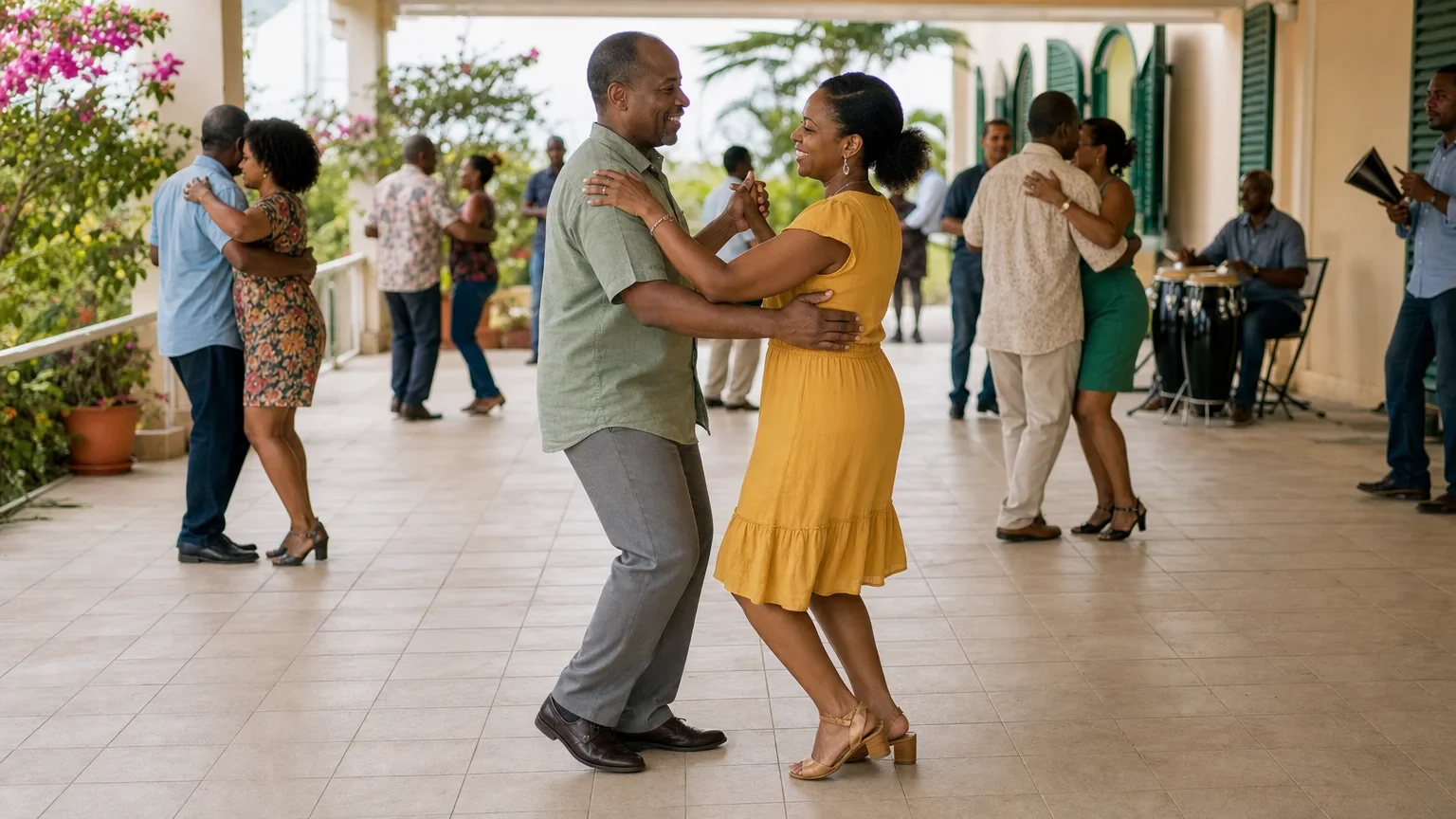
What dancers do: partner dancing with more bounce and playfulness than kizomba; in Angola, semba is still regarded as the “traditional” dance against which kizomba is measured.
Kizomba: a smoother 1980s sound
Kizomba music took shape in the 1980s, though the exact date is disputed. Moorman suggests the mid-1980s; Afropop Worldwide describes kizomba as the zouk-derived couple-dance music pioneered in the late 1980s by the Angolan musician Eduardo Paim; a 2025 Forbes África Lusófona feature places its emergence at the turn of the 1980s. The word itself is Kimbundu for “party”.
Moorman describes the new music as “synthed up”: smooth, tropical and danceable, and practical at a time when acoustic and electric instruments were scarce. Older musicians, she writes, dismissed it as overly influenced by zouk, the dance music of the French Antilles, but danced to it anyway. Cabo Verde mattered too. Afropop’s reporting on the Cape Verdean diaspora describes how, in Rotterdam, Cape Verdeans living alongside people from Guadeloupe and Martinique created cabo-zouk, cola-zouk and cabo-love, the last named after the slow zouk love; Moorman notes that Angolans listen to a great deal of kizomba produced by Cape Verdeans, while keeping a distinctly Angolan way of dancing it. For the Antillean side of that story, see our guide to zouk love.
What you hear: a slower, rounder, more even pulse than semba, with synthesizers, smooth production and often romantic melodies.
What dancers do: an AFP report from Luanda describes kizomba as danced in couples, close or very close, at a slower, less jerky and more sensual pace than semba. Angolan teachers interviewed by Lusa in Paris go further: in their view the basic steps of semba and kizomba are the same, and the difference lies in the cadence of the music, not the footwork.
Tarraxinha: slowed down to the hips
Tarraxinha is the slowest and most minimal member of the family. Writing in The FADER, the music writer Benjamin Lebrave describes Angolan producers who slowed kizomba down, removed some of its glossy layers and focused on the underlying rocking rhythm, with production peaking around 2006. Mixmag credits the Angolan DJ Znobia with pioneering this slow, stripped-down version. The name is also used, in some accounts, for the slow, close section of a kizomba song.
What you hear: a slow, sparse, heavy beat, often with little melody.
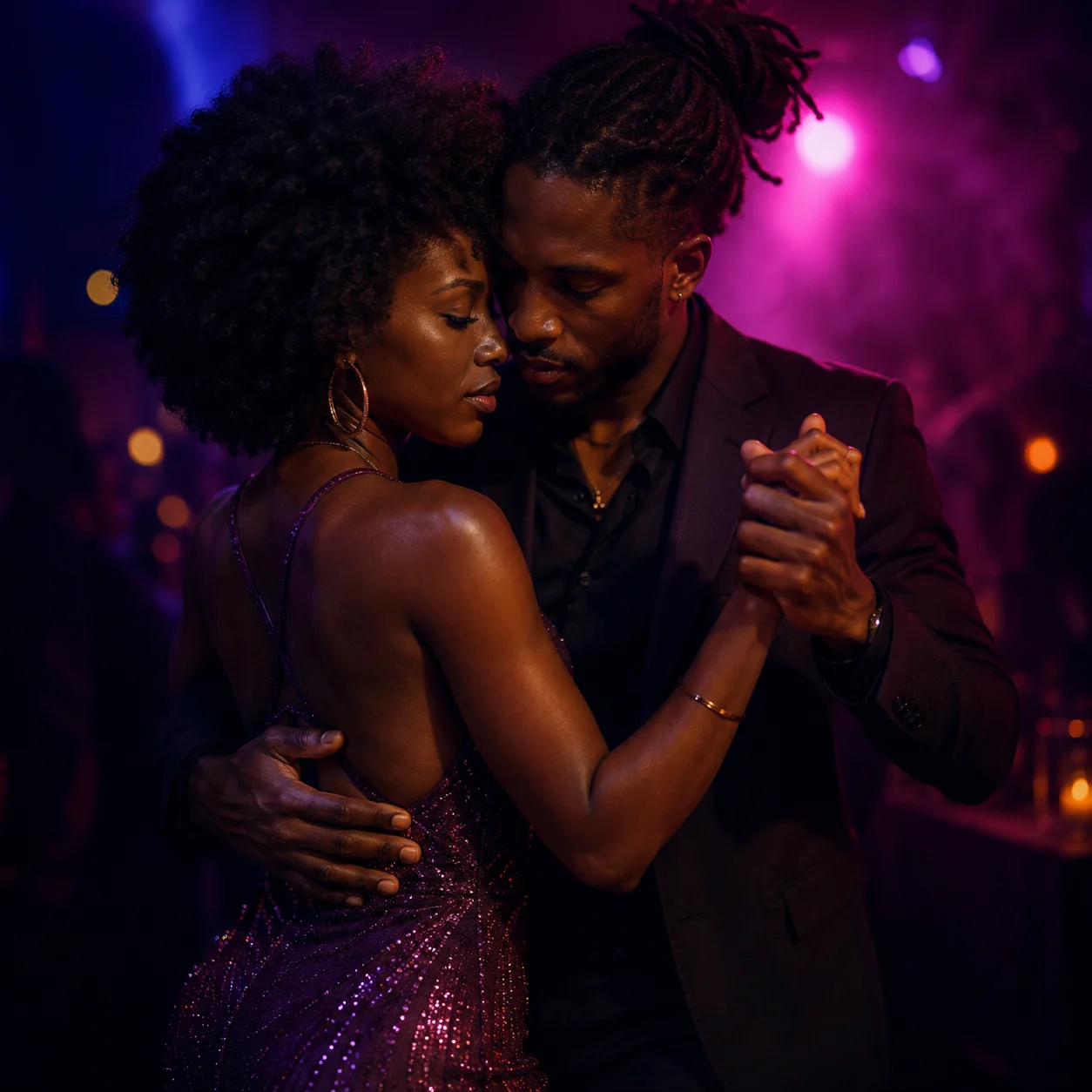
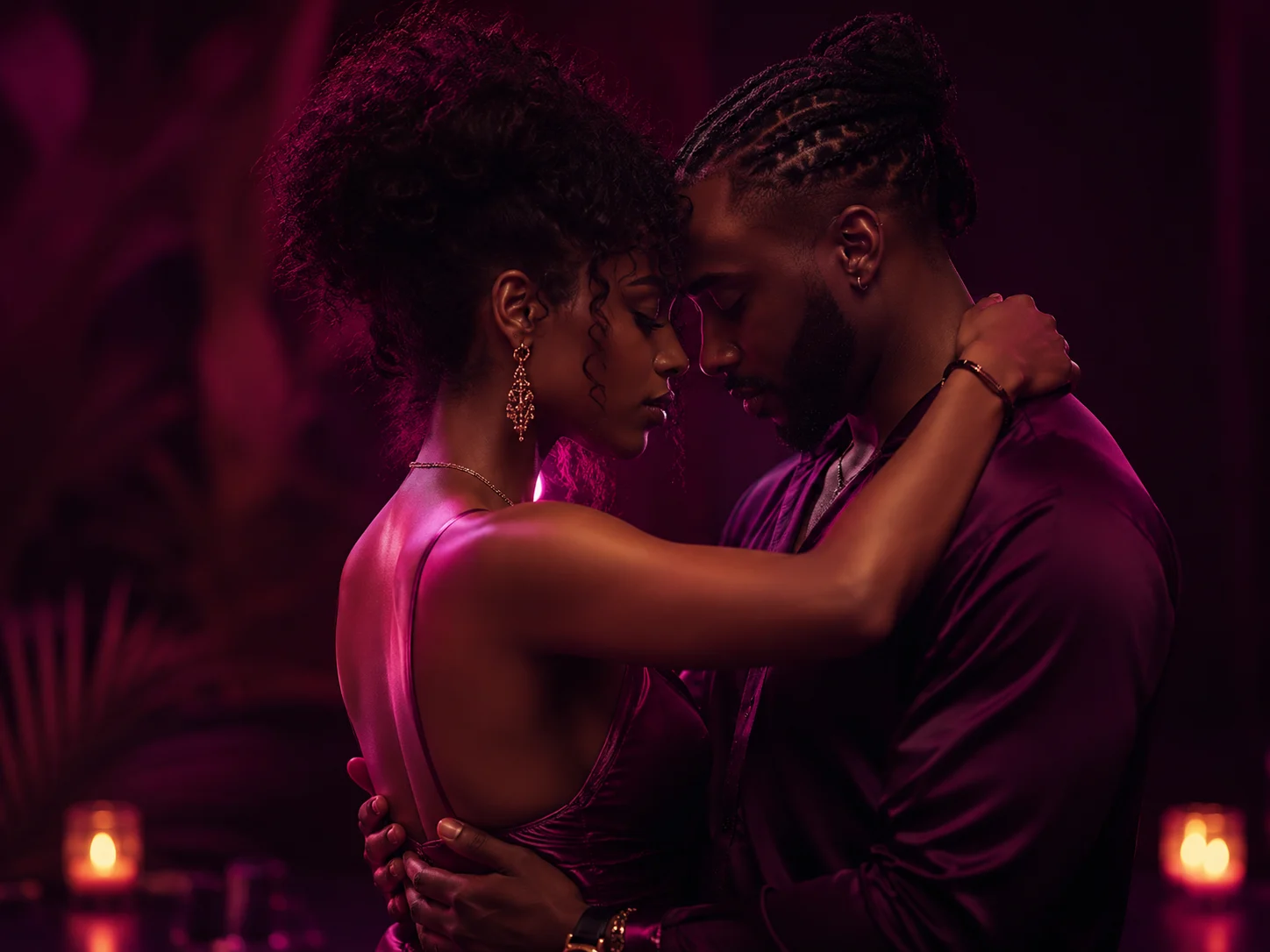
What dancers do: very little travelling, a very close hold and small, hip-centred movement. Lebrave describes partners as practically glued together.
Urban kiz: the European branch
Urban kiz (also written urbankiz or urban kizz) is the style that grew out of kizomba in European dance scenes. The anthropologist Paolla de Souza Thomaz, studying international workshops, describes how kizomba, taught in Europe and in contact with other genres, absorbed musical and choreographic influences from R&B, rap, hip hop, electronic and dance music and from other partner dances, above all zouk. The result, urbankiz, is in her words considerably different from kizomba as danced in Angola, with bodies held further apart, straighter and stiffer. The dance-events platform go&dance describes the Congo-born, France-raised teacher Curtis Seldon as the creator of urbankiz; other accounts in the scene credit different people and dates, and no primary dated source settles it.
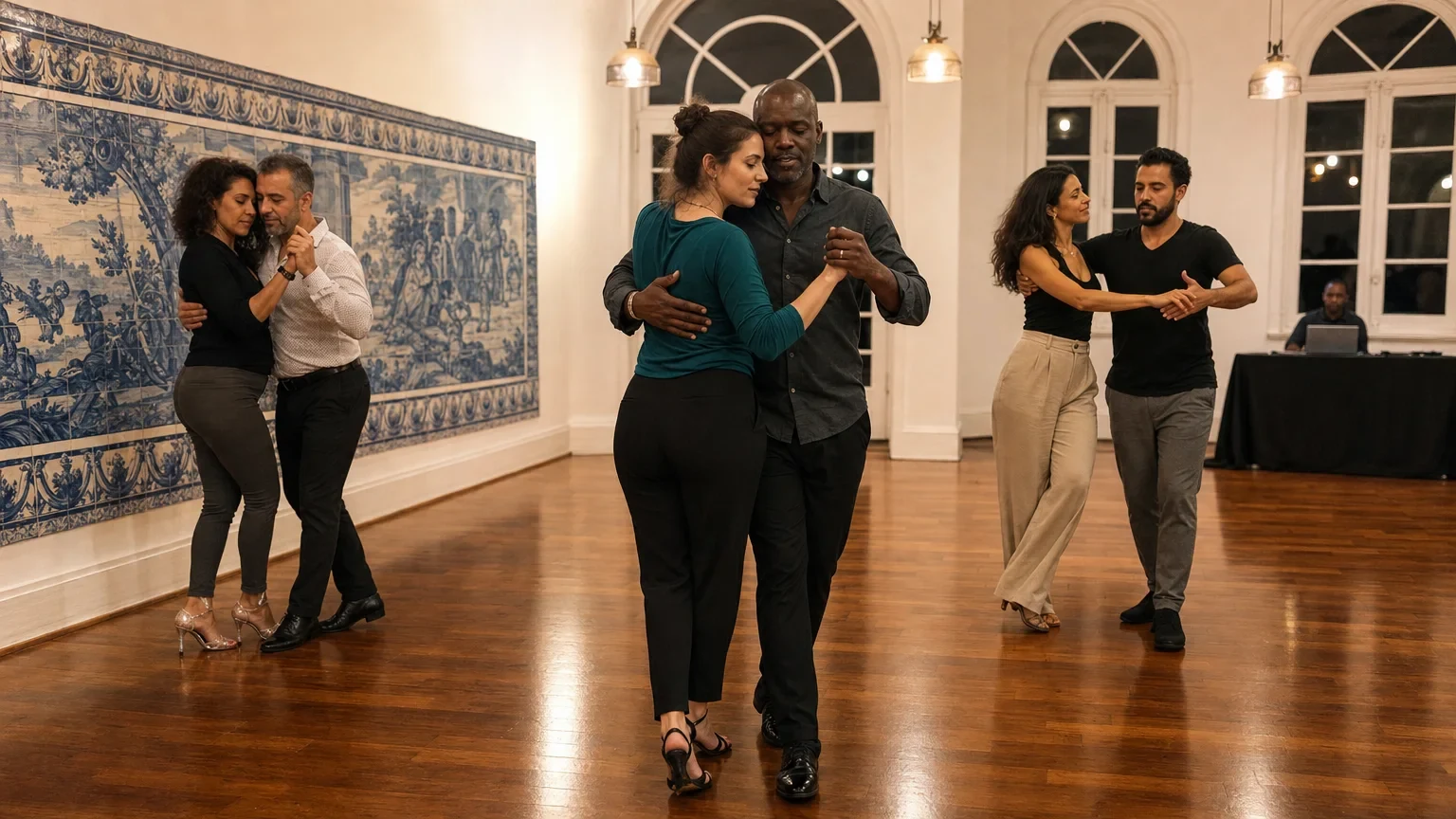
go&dance’s comparison of the two styles is a useful summary of what teachers commonly describe. In kizomba, it says, the lead comes through the torso, hips and legs, the couple moves on a circular path and the cadence is smooth and even. In urban kiz, the lead comes mainly through the arms, the path is linear, and the dance features frequent stops, sharp changes of direction and occasional acrobatics, often with more space between partners.
What you hear: electronic and R&B-influenced production, often with big drops and long breaks; in the Netherlands, notes the dance scholar Tiffany Pollock, “kizomba” has become an umbrella term for cabo-love, cabo-zouk and ghetto zouk.
What dancers do: straighter, more separated frames, linear walks, held pauses and sharp accents that follow the production.
Whose kizomba? The authenticity debate
These differences are not only technical. Jiménez Sedano describes heated arguments over kizomba’s Angolan, Cape Verdean, African or global character, and an Angolan state keen to claim the music and dance as national symbols. In AFP’s report, the Luanda DJ and radio presenter Zelo Castelo Branco says he barely recognises “his” kizomba abroad: teachers outside Angola changed the style and, in his words, it lost its soul. Thomaz frames the renaming of kizomba as urbankiz as a question of colonial power in the global dance market.
For a social dancer the practical lesson is respect. Urban kiz is a legitimate dance with its own teachers and community, and Angolan kizomba and semba are living traditions, not historical curiosities. Calling everything “kizomba”, or treating the European style as the real one, is where friction starts.
How to tell them apart by ear
The following listening checklist is our editorial guide, built on the sources above. It describes tendencies, not rules; plenty of tracks blur the lines.
- Is it bouncing or gliding? A brighter, more percussive, guitar-led groove points to semba. A smooth, even, synth-padded pulse points to kizomba.
- How much is there? If the track is mostly a slow, heavy beat with little melody, you are probably in tarraxinha territory.
- How is it produced? Electronic textures, R&B vocals, dramatic drops and long breaks suggest music chosen for urban kiz.
- Where is the pulse? In every style, find the steady beat in the bass and percussion first. The melody tells you the mood; the pulse tells you when to step.
- Where are the pauses? Breaks, stops and held notes are invitations. Kizomba and semba tend to flow through them; urban kiz tends to freeze on them.
Matching your movement to the music
Once you can name what is playing, let it set the size, texture and direction of your movement. These drills are our editorial suggestions for beginner-to-intermediate dancers; your teacher’s style should take precedence.
- The one-song survey. At a social, listen to the first thirty seconds of each track before dancing and name the style to yourself. You will start to hear the differences within a week.
- Walk, then mark. Practise walking on the pulse to a kizomba track, then switch to marking time in place without losing the beat. Moving between travel and stillness is the core of musical kizomba.
- Scale the step. Dance the same basic to a semba, a kizomba and a tarraxinha track. Let the steps grow livelier for semba, smoother for kizomba and almost disappear for tarraxinha, while the weight change stays on the beat.
- Pause practice. With a partner, choose a track with clear breaks. On each break, both partners stop and wait together, then resume on the returning pulse. Leaders signal the pause with their body, not by pulling the arms.
- Listen for layers. Play one track three times, following the bass, then the percussion, then the melody. Dance once to each. You will feel how each layer suggests a different quality of movement.
The point of all five is the same: musicality is not a store of memorised patterns. It is the shared habit of listening, and responding together, that turns steps into a conversation with your partner.
Closeness and context
The styles carry different social expectations. AFP reports that in Angola tarraxinha is almost exclusively reserved for consenting adults; one Luanda troupe leader told the agency his dancers do not perform it at weddings or family parties. In any style, closeness should be mutual and adjustable: begin with a comfortable frame, let it close only if both partners want it, and step back if your partner does. Mind the line of dance too, as linear urban-kiz walks and sudden stops need space on a crowded floor.
Common questions
Is kizomba the same as semba?
No, but they are closely related. Semba is the older Angolan style; kizomba developed from it in the 1980s with slower, smoother music. Some Angolan teachers say the basic steps are the same and only the cadence differs.
Is urban kiz a kind of kizomba?
It grew out of kizomba in Europe, but it has become distinct enough that many people treat it as a separate dance. Whether it should still be called kizomba is part of an ongoing debate.
What is tarraxinha?
A slow, minimal, Angolan-born style of kizomba music and dance, danced very close and almost in place, with the movement concentrated in the hips.
Which style should a beginner learn first?
Most classes start with a kizomba basic: walking on the pulse with a relaxed, connected frame. Once that feels steady, listening to semba, tarraxinha and urban kiz will show you how the same foundation adapts to different music.
Sources
Factual statements in this guide draw on the following. Teaching descriptions are attributed to the people or platforms that published them; the listening checklist and drills are our own editorial guidance.
- Livia Jiménez Sedano, “Kizomba Dance: From Market Success to Controversial National Brand”, Revue européenne des migrations internationales 35, nos. 3–4 (2019). Abstract consulted.
- Paolla de Souza Thomaz, “Da colonialidade: reflexões sobre as danças Kizomba e Urbankiz em workshops internacionais”, Revista Ensaios 16 (2020).
- Tiffany Pollock, “Desiring Connection: Affect in the Embodied Experience of Kizomba Dance”, Capacious 1, no. 2 (2018).
- Angola, Ministério da Cultura, Decreto Executivo n.º 91/24, 29 April 2024, declaring kizomba national intangible cultural heritage.
- Marissa Moorman, “Hums and buzzes: From semba to kuduro in Luanda”, Mail & Guardian, 4 February 2022; and “Marissa Moorman: The Master Interview”, Afropop Worldwide, 2012. See also her book Intonations (Ohio University Press, 2008), not consulted directly.
- Lusa/VerAngola, “Grupo N’Gola Ritmos foi uma das trincheiras no despertar da luta angolana”, 8 September 2025.
- Afropop Worldwide, “Paulo Flores Interview”, 2015; and “Hip Deep Angola: Kuduro and Beyond”.
- Lusafrica, artist page: Bonga.
- Marlon Bishop, “Diaspora Encounters: Spotlight on Cape Verdean-American Musicians”, Afropop Worldwide, 2009.
- AFP, “Aux racines de la kizomba, la danse angolaise qui séduit le monde”, via RTBF, 6 October 2017.
- Lusa/VerAngola, “Paris também dança ao ritmo do semba e kizomba angolanos”, 6 November 2015.
- Kadidja Pinto Monteiro, “Kizomba: como uma dança angolana conquistou o mundo”, Forbes África Lusófona, 2025.
- Benjamin Lebrave, “Lungu Lungu: DJ Marfox, Tarraxinha, and Rubbing Pelvises”, The FADER, 28 March 2013.
- Ian McQuaid, “Cargaa Cult”, Mixmag, 1 September 2015.
- go&dance, “9 differences between kizomba and urban kizz” and artist profile: Curtis Seldon.
Written and fact-checked by the ZoukAfrobeat editorial team. Where sources disagree, on dates, origins or names, the disagreement is stated and attributed. Teaching descriptions are attributed to the people or platforms that published them; the listening checklist and practice drills are our own editorial guidance and are labelled as such. No interviews were conducted and no quotations are invented. The featured image is an AI-generated photo illustration created for this article; it shows no real dancers, venue or event. See our editorial standards and corrections policy.